


GHARYAN – On Sunday, the Deputy Special Representative of the Secretary-General for Political Affairs visited the city of Gharyan, where she met with local officials, tribal elders and community notables, youth representatives, and security officials. The visit was part of the ongoing efforts of the United Nations Support Mission in Libya to promote a more inclusive political process, informed by the views of the broader communities. Discussions focused on the next steps toward advancing the UNSMIL-facilitated roadmap to unifying institutions and holding national elections, as well as strengthening democracy, rule of law and long-term stability in Libya.
Prioritizing the constitutional track to resolve the political crisis
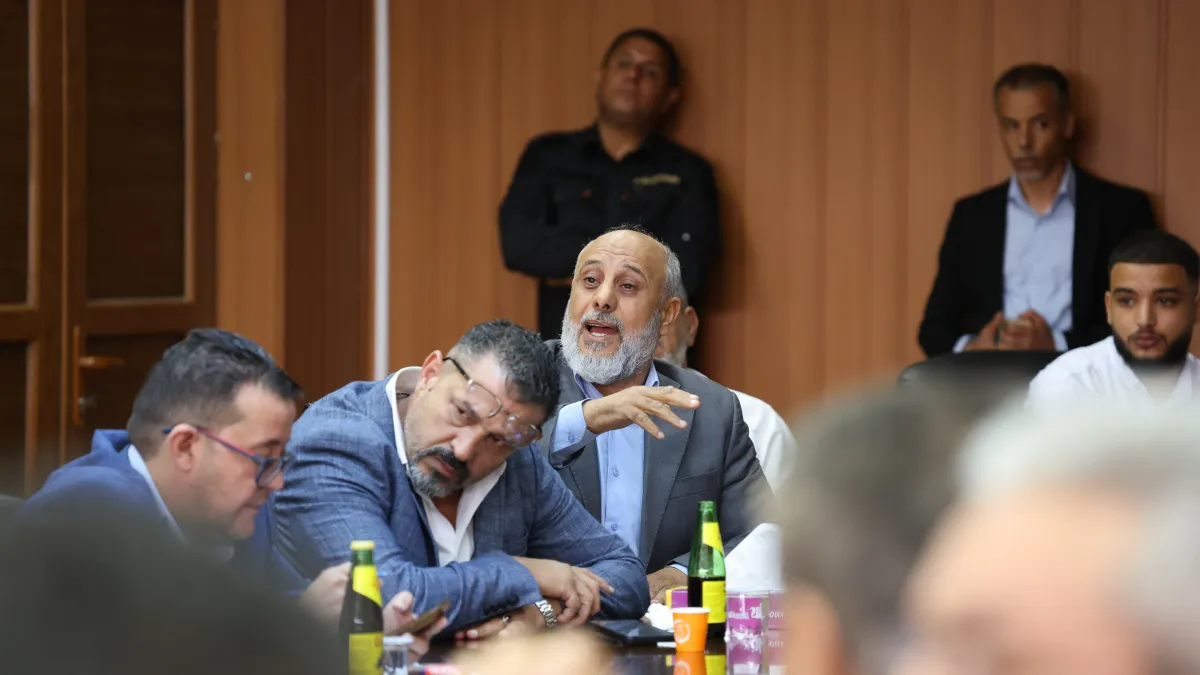
During her first meeting, held at the University of Gharyan, DSRSG Stephanie Koury listened to the views and ideas of a group that included municipal council members, academics, and local elders and notables. The key point that was raised by the majority of Gharyan elites was the issue of the referendum of the 2017 draft constitution. The participants expressed their frustration with the persistent political crisis that is characterized by a cycle of recurring transitional phases.
"Repeating the experience of transitional governments simply means repeating failed attempts," an academic present in the meeting said. "All political bodies have lost their legitimacy; they continue to extend their own mandates without honoring the popular will. This cannot continue without giving the people the opportunity to have their say through a referendum on a constitution.”
A local elder added, "Libya’s unity began here, with the Gharyan Conference of 1920. We maintain that Libya can only truly be built by adopting a permanent constitution, one agreed upon by the Libyan people themselves".
Another participant underscored the importance of a constitution. "A state based on a constitution means a state governed by the rule of law,” he said.
DSRSG Koury clarified that UNSMIL fully recognizes the importance of having a permanent constitution for Libya. "It's a very important goal and we have supported and will continue to support Libyan efforts to reach a permanent constitution" she said, emphasising that it is a sovereign Libyan decision and something which both the Advisory Committee and the Structured Dialogue studied and made recommendations on the way forward to achieve this, including achieving greater political stability as a prerequisite.
The Advisory Committee and the Structured Dialogue were Libyan assemblies, facilitated by UNSMIL, that consulted on the path to elections and addressing short-and-long-term challenges facing the country, respectively.
The Mission’s political roadmap, which aims to support Libyans to organize elections, are a means, not an end, as core objective remains supporting Libyan efforts to achieve stability for Libya, including a permanent constitution.
The division negatively affects citizens
Participants highlighted the worsening living conditions facing many Libyans. One academic remarked, "The average citizen lives in poverty, struggling against the difficult living challenges of the present”.
Another participant shared similar concerns, stating, "There is no access to quality education, proper healthcare, or healthy, nutritious food". He argued that political and institutional division are at the root of these challenges, adding, "All the challenges we face today are the handiwork of a small political elite; in reality, ordinary citizens have no conflicts among themselves."
A local elder echoed this view, saying, "Libya has become held hostage by individuals who control its destiny and its resources,” he said.
Participants’ concerns reflect broader economic pressures across the country. According to the Central Bank of Libya, inflation surpassed 14 percent, while the World Food Programme’s market indicator reported the food prices alone have risen by an additional 3.8 percent during the month of August. These challenges are particularly acute in the western and southern regions. Meanwhile, the Libyan dinar continues to depreciate on the parallel market, where the gap between official and informal exchange rates has reached 59 percent.
Youth demand to have their voices heard
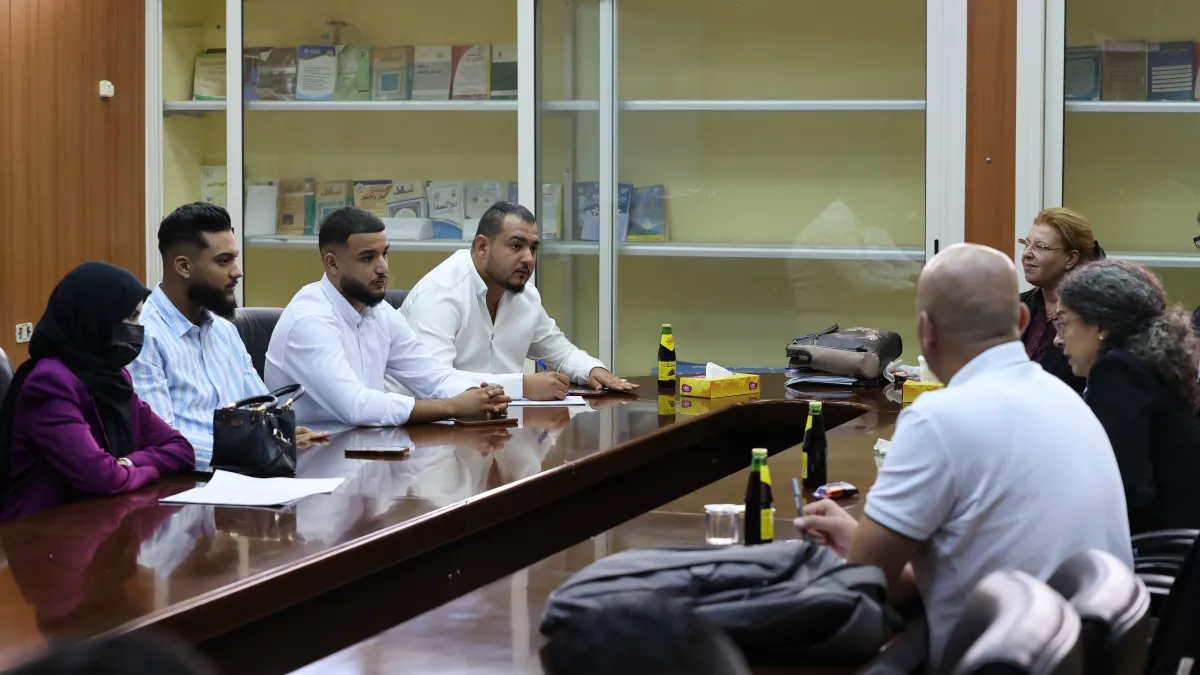
During her second meeting with a group of newly elected members of the Local Youth Council and the Gharyan Office of the Agency for Youth Voluntary Efforts, DSRSG Koury provided an update on the latest developments in the political process. She discussed the recommendations emerging from the Structured Dialogue as well as the endorsement of the Smaller Convening Agreement. While the participants welcomed these developments, they voiced concern about delays in implementation and stressed the need for an inclusive process that engages a broader spectrum of society, particularly young people. They emphasized the importance of ensuring that youth voices and particularly from the Western mountain region are heard and reflected in decision-making.
DSRSG Koury also explained that the Structured Dialogue recommended the critical importance of inclusion of youth across Libyan, not only in political processes and the executive authority, but in a range of sectors and areas including economics, security, climate change, human rights and others. This is intended to guarantee equal opportunity and prevent marginalization. The discussion also focused on UN support for capacity building and ongoing programs for youth engagement.
Security readiness for elections
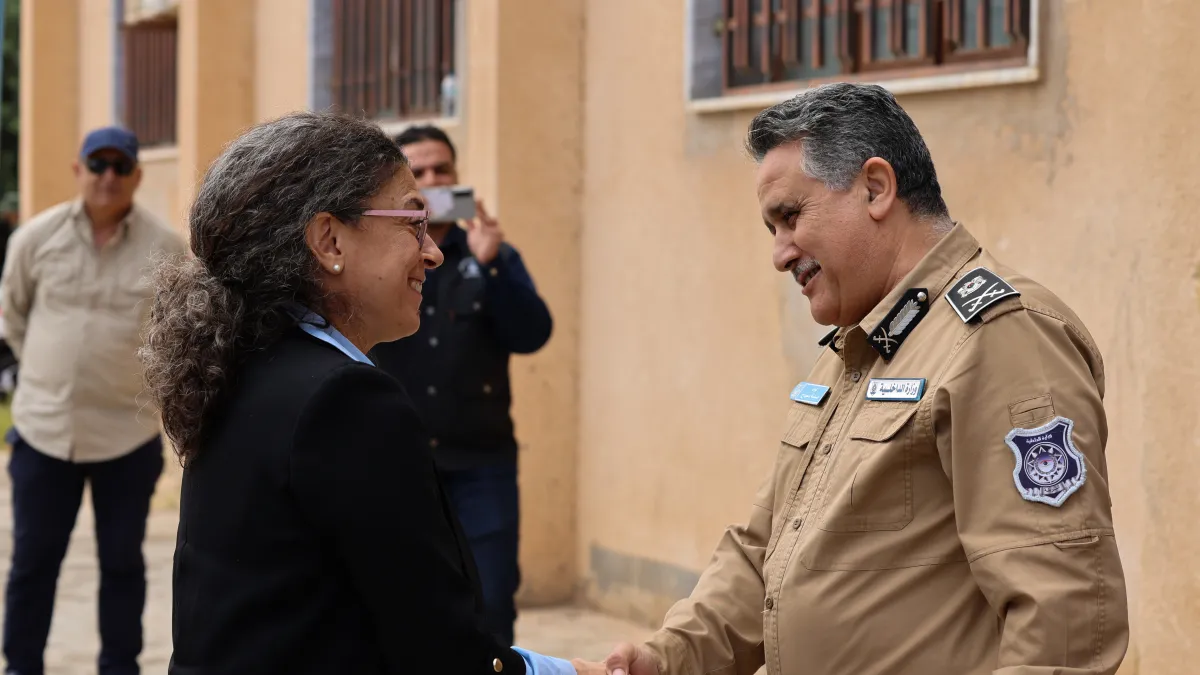
DSRSG Khoury also visited the East Mountain Security Directorate, where she discussed key recommendations from the Security Track of the Structured Dialogue with the Director and several security officers. During this meeting, officials shared their past experiences in securing municipal elections, local youth council elections, and professional union elections.
Major General Osama Dahdah reaffirmed the Directorate readiness to support future electoral processes, stating "We are confident in our ability to successfully manage the security for any electoral process, ensuring that citizens’ voices are heard and their rights are exercised."
Security officials emphasized the importance of effective security sector governance as a cornerstone of stability. They highlighted the need for stronger oversight, coordination, accountability, and community trust to maintain security, support democratic processes, and create an environment conducive to sustainable development and social cohesion.
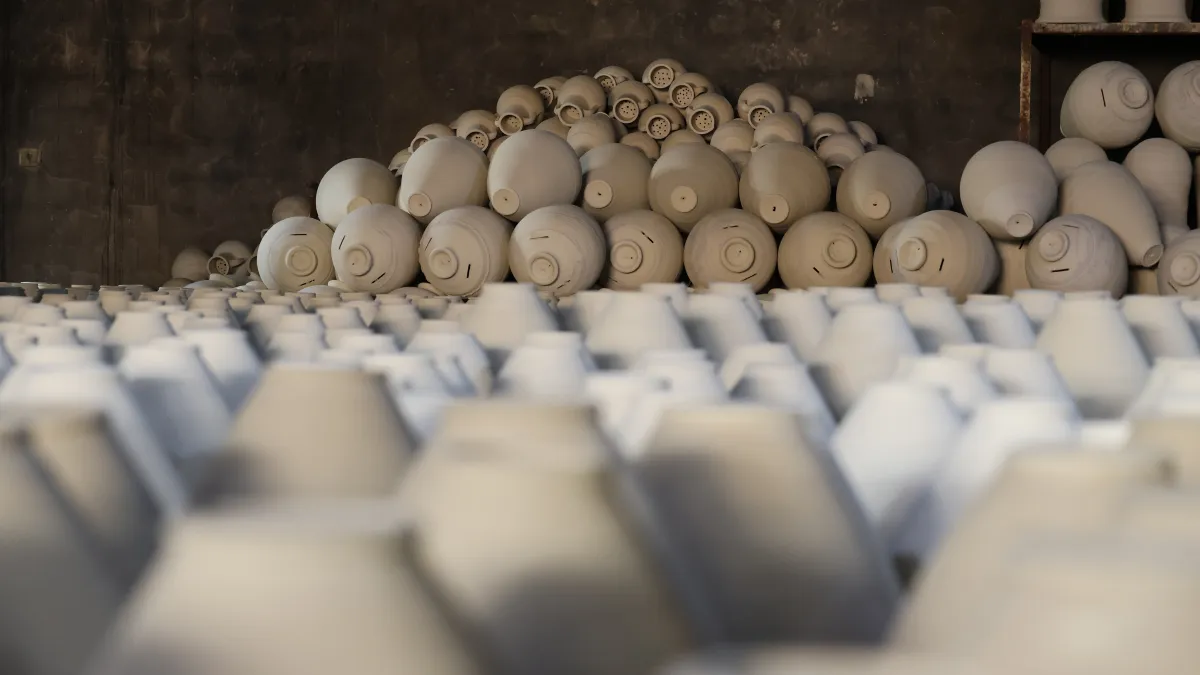
At the conclusion of her visit, DSRSG Khoury toured a ceramics and pottery workshop where she learned firsthand about the long tradition in Gharyan of pottery production from a local craftsperson. She expressed great admiration for the continued practice of this traditional craft, which uses locally sourced natural materials to create both artistic and functional products.


