


TRIPOLI – Deputy Special Representative of the Secretary General and Resident Coordinator for Libya, Ulrika Richardson held an online discussion on Wednesday 1 April focusing on the work of the Structured Dialogue’s (SD) economic track and its role in developing recommendations aimed at addressing key economic challenges and improving the lives of Libyan citizens.
Over sixty men and women from across Libya joined the discussion, highlighting their concerns around lack of transparency, limited economic opportunities particularly for youth and women, the need for economic diversification and the urgency to reach an agreement on a unified budget to enable more effective and equitable resource distribution. Participants also reflected on the role of the UN in Libya,asking about its efforts to support Libya in the current situation.
The UN’s role is to work closely with Libyan authorities and institutions in advancing nationwide progress and stability. UNSMIL’s particular mandate is to facilitate Libyans to develop political solutions through dialogue and consensus to resolve the political fragmentation, the Structured Dialogue forms part of the political process by developing short, medium and long-term reform proposals that will be submitted to national institutions and authorities to help advance consensus on how to exit the current unsustainable situation.
The economic track is one of four tracks of the SD, alongside governance, security, and national reconciliation and human rights. It focuses on advancing concrete, Libyan-led recommendations to strengthen macroeconomic stability, improve the management of natural and sovereign resources, and promote economic growth and diversification. Central to its work is enhancing public financial management, reinforcing oversight and transparency, and supporting more accountable, rules-based economic governance - key foundations for tackling corruption, restoring public trust, and ensuring that Libya’s resources are managed in a way that benefits all citizens.
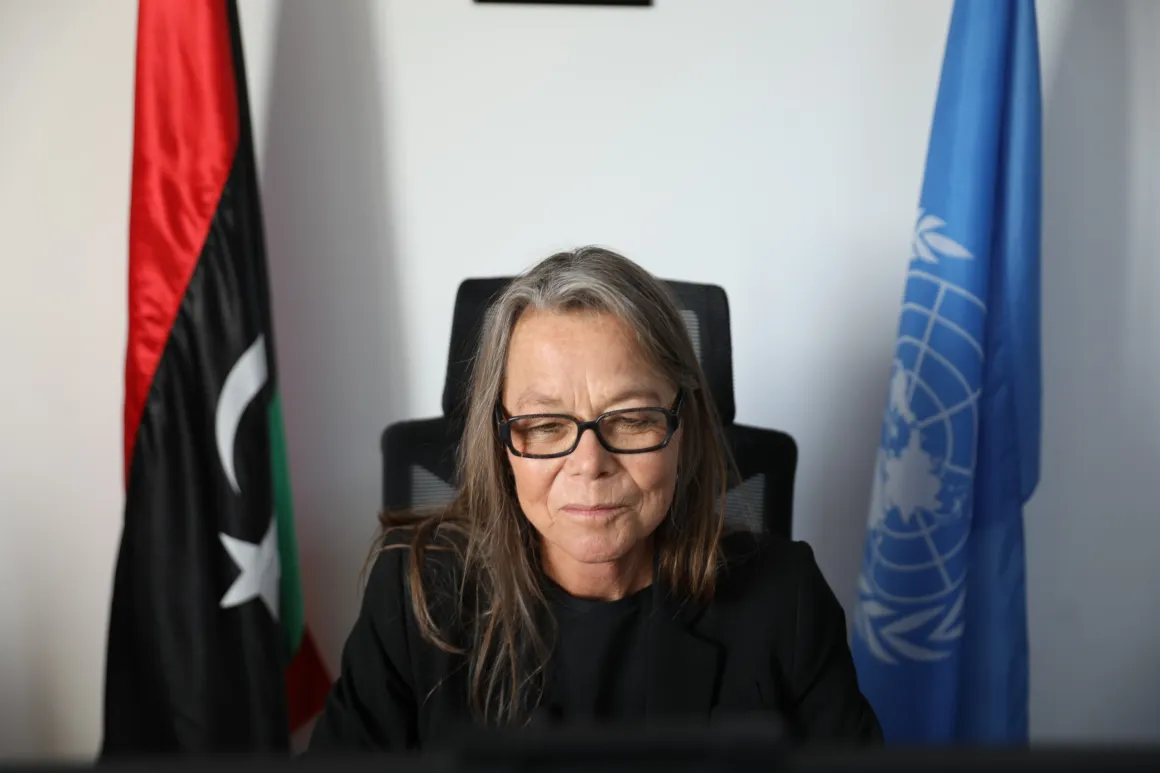
“All of these issues have a profound impact on the daily lives of communities and families, particularly women and young people. Therefore, for the process to be truly Libyan-owned, it is essential that the perspectives of women, youth and persons with disability are meaningfully reflected in these discussions” said DSRSG RC Richardson, responding to questions around inclusive participation in the SD. She noted that 35 per cent of members of the SD are women and UNSMIL has establish the Libyan Women’s Caucus to support a broader collection of women to engage on key issues.
Participants also raised concerns over the urgency needed to address the deteriorating economic situation, the persistently high unemployment in Libya, particularly among youth and women, and its adverse impact on opportunities and livelihoods. They underscored the need for reforming the private sector environment and banking framework to enable business growth, expand access to finance, and create more sustainable economic opportunities for all.
“Libya’s economy still relies heavily on public sector salaries and oil sector revenues, especially in the context where liquidity challenges continue to affect financial stability,” said one participant. “This has made it difficult for the private sector to grow, and for youth to find stable opportunities outside government employment. We need concrete actions to support real private sector growth and better management of oil revenues.”
We need institutionalized access to financing schemes for startups for small businesses to grow
Addressing inflation and ensuring economic stability was raised as an urgent issue, with participants adding that these efforts are closely linked to resolving ongoing political and security fragmentation. They further stressed the importance of combating the widespread corruption and strengthening the rule of law, highlighting that credible legal and institutional guarantees are essential to protecting citizens’ rights and preserving economic stability.
“Members of the SD have made it very clear that a solution to how to manage the country’s wealth needs to be found,” said DSRSG RC Richardson. “These revenues could be reinvested productively into education, healthcare, and infrastructure. While some initiatives are underway, much more could be achieved with a more balanced and transparent approach to reinvestment revenues across the country.”
This online discussion followed a similar session on the governance track with SRSG Hanna Tetteh last month. The next online discussion will be held on 16 April on the security track with DSRSG Stephaie Koury and is open to all Libyans.
Additionally, UNSMIL has established an online youth platform to increase youth engagement in the SD and is organizing specific discussions with young men and women online to gather their ideas and recommendations through the platform. Throughout Ramadan, the Mission ran the ‘Have Your Say’ campaign across Libya to gather views from 6,000 respondents which will fed into the discussions of the four SD tracks.
The Structured Dialogue aligns with UNSMIL’s mandate to use its good offices to facilitate an inclusive, Libyan-owned, and Libyan-led political process. The initiative aims to advance consensus on governance arrangements toward elections and long-term stability without predetermining outcomes.


